
Techno-Economic and Sustainability Assessment of Agrivoltaic Irrigation Systems in Aguata Agricultural Zone, Nigeria
-
Anyene Chinedu Chukwuemeka Christian


Federal Polytechnic, Oko, Anambra State, Nigeria
Anyene Ogochukwu BlessingSt. Lawrence Anglican Church, Ndiowu, Anambra State, Nigeria
| Received 25 Jan, 2026 |
Accepted 16 May, 2026 |
Published 30 May, 2026 |
Background and Objective: Agrivoltaics, the integration of solar photovoltaic systems with agricultural production, offers a promising solution for enhancing irrigation sustainability in water-stressed regions. However, adoption across Sub-Saharan Africa, particularly in Nigeria, remains limited despite its potential to address energy and water challenges. This study aims to evaluate the techno-economic viability and sustainability of agrivoltaic irrigation systems in Aguata Agricultural Zone, Nigeria, and to identify the key factors influencing their adoption and perceived effectiveness among agricultural stakeholders. Materials and Methods: A cross-sectional survey was conducted to targeting farmers, extension officers, and water resource managers. Data were collected using a validated semi-structured questionnaire and analyzed with SPSS v26, applying descriptive statistics and inferential tests (OLS and logistic regression) at p≤0.05. Ethical approval, informed consent, and participant confidentiality were ensured. Results: Findings reveal a substantial adoption gap, with only 26.6% of respondents reporting any form of agrivoltaic application, although 86.7% expressed willingness to adopt under supportive conditions. Major barriers identified include high installation costs, limited technical knowledge, and land constraints. Education level, access to extension services, awareness, prior exposure to solar technologies, and government support were found to significantly influence both adoption willingness and perceived effectiveness. Conclusion: The results highlight the strong potential of agrivoltaic irrigation systems to improve irrigation sustainability and climate resilience in similar agro-ecological contexts. However, successful large-scale adoption will require enabling policies, targeted capacity-building programs, and innovative financing mechanisms.
| Copyright © 2026 Chukwuemeka Christian and Blessing. This is an open-access article distributed under the Creative Commons Attribution License, which permits unrestricted use, distribution, and reproduction in any medium, provided the original work is properly cited. |
INTRODUCTION
Irrigation represents a critical component of modern agriculture, particularly in regions characterized by erratic rainfall patterns and increasing climatic variability. Defined as the artificial application of water to support crop growth, irrigation systems range from traditional surface methods to advanced sensor-based precision networks1. In Nigeria, irrigation has historically enhanced agricultural productivity, especially in northern regions prone to desertification and prolonged dry spells2. However, conventional irrigation practices often depend on fossil fuel-powered pumps or inefficient water distribution systems, contributing to environmental degradation and economic vulnerability.
Agrivoltaics, the synergistic integration of solar photovoltaic (PV) panels with agricultural land use3, emerges as an innovative solution to the interconnected challenges of water scarcity, energy demand, and food security. By mounting solar panels above crops, agrivoltaic systems create a microclimate that reduces soil temperature and evapotranspiration, thereby conserving soil moisture and enhancing water-use efficiency4. It has been reported that agrivoltaics is capable of reducing water loss through transpiration to about 65% in certain crops5, and at the same time fostering the simultaneous generation of renewable energy. This dual-use approach optimizes land productivity, supports climate resilience, and aligns with Sustainable Development Goals (SDGs) related to clean energy, food security, and sustainable water management6.
Despite its potential, agrivoltaics remains underexplored in Sub-Saharan Africa, particularly in Nigeria, where irrigation-dependent agriculture faces mounting pressures from climate change, land degradation, and rising energy costs7. Current irrigation practices in the Aguata Agricultural Zone are predominantly rain-fed, with limited adoption of mechanized or solar-powered systems. This reliance on seasonal rainfall constrains year-round farming, reduces crop yields, and exacerbates vulnerability to droughts. Moreover, awareness of agrivoltaics is low among local farmers and agricultural stakeholders, impeding its integration into regional water management strategies.
There is a critical knowledge gap regarding the socio-economic, technical, and perceptual factors influencing agrivoltaics adoption in Nigerian agricultural contexts. Without empirical evidence on farmer readiness, perceived benefits, and implementation barriers, policymakers and development agencies lack the insights needed to design effective intervention programs. This study addresses these gaps by investigating the techno-economic and Sustainability Analysis of Agrivoltaic Irrigation in the Aguata Agricultural Zone, Nigeria. It spans through the specific objectives that includes determination of the level of agrivoltaics application, evaluation of farmers’ awareness and willingness to adopt agrivoltaics, identification of factors influencing adoption decisions and assessment of the perceived importance of agrivoltaics for irrigation sustainability in the agricultural zone.
MATERIALS AND METHODS
Research design and study area and duration: This research employed a cross-sectional survey design, combining quantitative and qualitative data collection approaches to assess perceptions, awareness, and practices related to irrigation and agrivoltaics. The study was conducted in the Aguata Agricultural Zone, Anambra State, Nigeria. The zone encompasses five Local Government Areas (LGAs), namely Aguata, Orumba North, Orumba South, Nnewi North, and Nnewi South. The area experiences a tropical climate with distinct wet (April-October) and dry (November-March) seasons, making irrigation crucial for dry-season farming. The study span through November-2025 to January-2026.
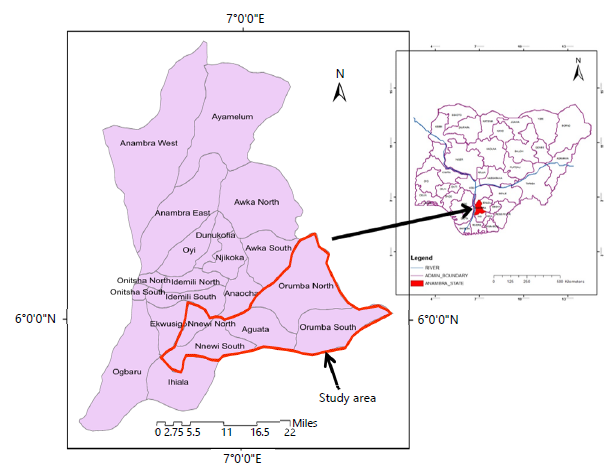
Population and sampling techniques: The study adopted a quantitative cross-sectional survey design targeting key agricultural stakeholders within the Aguata Agricultural Zone of Anambra State. The State is situated in South-Eastern Nigeria, bounded with Delta State to the West, Imo State and Rivers State to the South, Enugu State to the East, and Kogi State to the North8, and consists of twenty-one local government area (Fig. 1). Having Awka Town as it administrative headquarters, the State is situated in tropical rainforest, and lies between Latitudes 5°32' and 6°45' N and Longitudes 6°43' and 7°22' E, an estimated land area of 4,855 km2 and approximated population of 4,182,0329. Anambra State has a respective mean annual rainfall and temperature of 138 mm and 25.910. The favourable climatic compositions of the area foster serious agricultural activities in the area and favours the predominant production of cassava, rice, maize, cocoyam, melon, plantain, oil palm, and vegetable.
|
For ease of planning and rural development, Anambra State was further divided into four agricultural zones namely-Onitsha, Aguata, Awka, and Anambra11. The focus area of study-Aguata Agricultural Zone comprises of five Local Government Areas namely Aguata, Orumba North, Orumba South, Nnewi North, and Nnewi South12. It embodies seven blocks namely Aguata block 1, Aguata block 2, Orumba block 1, Orumba block 2, Orumba block 3, Nnenwi block 1, and Nnenwi block 2.
The study population included small-, medium-, and large-scale crop farmers, agricultural extension officers of the Anambra State Ministry of Agriculture, and community-level water resource managers. This stakeholder-focused sampling frame was chosen to ensure that respondents possessed direct experience with irrigation practices, climate variability, and adaptation decision-making relevant to the study objectives.
Because no definitive census data existed for this specific stakeholder group, the population size was estimated using a multi-stage approach. First, the projected total population of the five LGAs was obtained from the 2022 projections of the 2006 National Population Census, estimated at approximately 855,287 inhabitants6. The figure was further refined with the purported agricultural labour force participation rate (≈55%) for South-Eastern Nigeria13 in line with records obtained from the Anambra State Ministry of Agriculture regarding registered farmers and extension personnel. With this, an estimated agricultural stakeholders’ population of 100,000 was obtained.
Yamane’s formula, stated in Equation (1) reported by Ahmed14 and Fogalo and Abegaz15 was used to determine the sample size to ensure for effective statistical representativeness:
| (1) |
Where:
| n | = | Sample size | |
| N | = | Population size | |
| e | = | Margin of error (0.05 for a 95% confidence level) |
The computation made with the above equation gave an approximated sample size of 400. The proportional allocation formula stated in Equation (2)16 was used to determine sample size for the constituting local government areas of the zone:
| (2) |
Where:
| nh | = | The sample for stratum h | |
| n | = | Total sample size | |
| Nh | = | Population size for stratum h | |
| N | = | Total population size |
Instrumentation: A semi-structured questionnaire was developed, comprising seven sections:
| • | Socio-demographic characteristics | |
| • | Current irrigation practices | |
| • | Awareness and knowledge of agrivoltaics | |
| • | Perceptions of agrivoltaics for irrigation sustainability | |
| • | Level of agrivoltaics application | |
| • | Willingness to adopt the technology | |
| • | Importance of agrivoltaics for irrigation sustainability |
The instrument was validated by experts and pilot-tested with 20 respondents. Cronbach’s alpha was computed for reliability, yielding a value of 0.78, indicating acceptable internal consistency.
Data analysis: Data were analysed using SPSS version 26. Descriptive statistics (frequencies, percentages, means) summarized respondent characteristics and survey responses. A significance level of p≤0.05 was adopted for all inferential statistical tests to determine statistical significance. The inferential analyses included.
Ordinary least squares (OLS) regression: To identify factors influencing willingness to adopt agrivoltaics, OLS expression used by Osibanjo et al.17 and Wooldridge18 was adopted:
| (3) |
Where
| WTA | = | Willingness to adopt (4-point Likert scale) | |
| X1 | = | Age (years) | |
| X2 | = | Gender (1 = Male, 0 = Female) | |
| X3 | = | Education (years) | |
| X4 | = | Farming experience (years) | |
| X5 | = | Farm size (hectares) | |
| X6 | = | Access to extension services (1 = Yes, 0 = No) | |
| X7 | = | Awareness of agrivoltaics (1 = Yes, 0 = No) | |
| X8 | = | Irrigation type (1 = Mechanized, 0 = Rain-fed/Manual) | |
| ε | = | Error term |
Logistic regression: To assess predictors of perceived effectiveness of agrivoltaics, logic regression expression by Agresti19 and Sperandei20 a binary logistic model was used:
| (4) |
Where
| P | = | Probability that agrivoltaics is perceived as effective (1 = Yes, 0 = No) | |
| Z1 | = | Installation cost (1 = High, 0 = Low) | |
| Z2 | = | Technical knowledge (1 = Adequate, 0 = Inadequate) | |
| Z3 | = | Land availability (1 = Yes, 0 = No) | |
| Z4 | = | Government support (1 = Yes, 0 = No) | |
| Z5 | = | Prior solar exposure (1 = Yes, 0 = No) |
Ethical considerations: Informed consent was obtained from all participants. Anonymity and confidentiality were maintained throughout the study.
RESULTS AND DISCUSSIONS
Socio-demographic characteristics of respondents: Table 1 presents the background information of respondents. The majority were male (71.01%), aged 36-55 years (71.01%), and had tertiary education (48.94%). About 39.89% were full-time farmers, and 46.01% had 6-10 years of farming experience (Table 1).
| Table 1: | Respondents’ background information | |||
| Variable | Category | Frequency | Percentage |
| Gender | Male | 267 | 71.01 |
| Female | 109 | 28.99 | |
| Age (years) | ≤25 | 22 | 5.85 |
| 26–35 | 34 | 9.04 | |
| 36–45 | 132 | 35.11 | |
| 46–55 | 135 | 35.9 | |
| >55 | 53 | 14.1 | |
| Occupation | Full-time farmer | 150 | 39.89 |
| Part-time farmer | 180 | 47.87 | |
| Extension officer | 26 | 6.91 | |
| Researcher | 20 | 5.33 | |
| Education | Primary | 64 | 17.02 |
| Secondary | 86 | 22.87 | |
| Tertiary | 184 | 48.94 | |
| Vocational/Technical | 42 | 11.17 | |
| Farming experience | ≤5 years | 128 | 34.04 |
| 6–10 years | 173 | 46.01 | |
| 11–20 years | 64 | 17.02 | |
| >20 years | 11 | 2.93 | |
| Source: Researcher’s Field work, 2025 | |||
|
|
| Table 2: | Level of agrivoltaics application | |||
| Indicator | Agree+ (%) | Disagree+ (%) |
| Currently in use | 6.65 | 73.4 |
| Positive attitude toward adoption | 57.45 | 11.18 |
| Applied in high-scale agriculture | 11.71 | 58.25 |
| Applied in low-scale agriculture | 21.01 | 52.93 |
| Not yet noticeably applied | 69.95 | 12.24 |
| Source: Researcher’s Field work, 2025, Agree+: SA+A and Disagree+: D+SD | ||
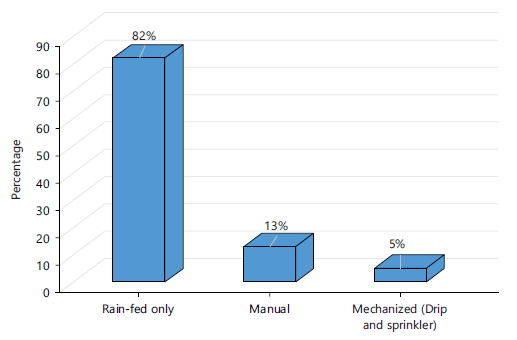
Current irrigation practices: A significant number (82%) of respondents indicated that they practice on rain-fed agriculture, while a very low proportion (5%) maintained that they are using such mechanized technique(s) like drip or/and sprinkler irrigation. This highlights a critical irrigation gap and underscores the need for sustainable water management innovations (Fig. 2).
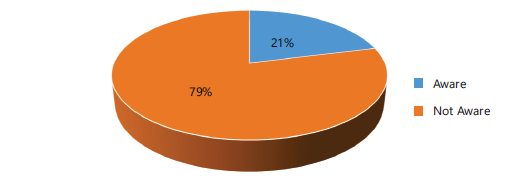
Awareness and knowledge of agrivoltaics: Only 21% of respondents had prior awareness of agrivoltaics, indicating a substantial knowledge deficit (Fig. 3). Among those aware, sources of information included agricultural workshops (32%), media (28%), and extension officers (25%).
Level of agrivoltaics application: Table 2 shows that 73.4% of respondents indicated no current use of agrivoltaics in their communities. Only 26.6% reported traces of application, predominantly in pilot or experimental setups.
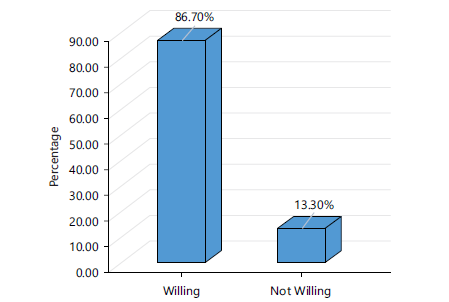
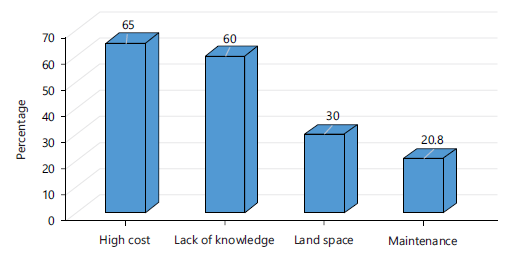
Willingness to adopt agrivoltaics: In spite of present low adoption of agrivoltaics in Agauata Agricultural Zone, 86.7% of respondents admitted willingness towards the adoption of the technology if training, financing, or policy incentives are provided (Fig. 4). Key barriers included high installation costs (65%), lack of technical knowledge (60%), land scarcity (30%), and maintenance concerns (20.8%).
|
|
|
Barriers to the adoption of agrivoltaic technology in the zone: Respondents were clear about the significant barriers. The primary obstacles identified were: High installation cost (65%), lack of knowledge about the technology (60%), scarcity of land (30%), and maintenance requirements (20.8%) (Fig. 5). The cost barrier is unsurprising and universal in renewable energy adoption. The "lack of knowledge" barrier directly corroborates the awareness gap identified earlier.
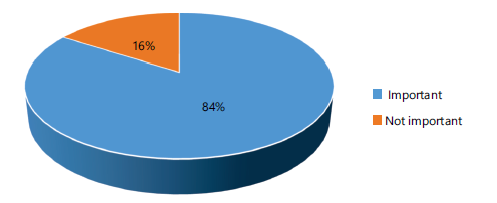
Importance of agrivoltaics to irrigation sustainability: A very high proportion of the respondents (84%) acquiesced to the fact that agrivoltaics is very important for the irrigation sustainability in the zone (Fig. 6). Perceived benefits included reduced water wastage (76%), lower irrigation costs (60%), continuous water supply (58%), and environmental sustainability (52%).
| Table 3: | OLS regression results for willingness to adopt agrivoltaics technology | |||
| Variable | Coefficient | Std. Error | t-value | p-value |
| Constant | 1.245 | 0.32 | 3.891 | 0 |
| Age | -0.021 | 0.011 | -1.909 | 0.057 |
| Gender (male) | 0.118 | 0.089 | 1.326 | 0.186 |
| Education | 0.204 | 0.042 | 4.857 | 0.000*** |
| Farming experience | 0.089 | 0.038 | 2.342 | 0.020* |
| Farm size | 0.156 | 0.051 | 3.059 | 0.002** |
| Extension access | 0.311 | 0.075 | 4.147 | 0.000*** |
| Awareness of agrivoltaics | 0.402 | 0.082 | 4.902 | 0.000*** |
| Irrigation type | 0.187 | 0.069 | 2.71 | 0.007** |
| Source: Researcher’s Field work, 2025, ***p<0.001, **p<0.01 and p<0.05 | ||||
| Table 4: | Logistic regression results for perceived effectiveness | |||
| Variable | β | S.E. | χ2 | p-value | Exp(β) | 95% CI for Exp(β) |
| Installation cost | -0.89 | 0.31 | 8.24 | 0.004** | 0.41 | (0.23, 0.75) |
| Technical knowledge | 1.22 | 0.28 | 18.98 | 0.000*** | 3.39 | (1.96, 5.87) |
| Land availability | 0.67 | 0.25 | 7.18 | 0.007** | 1.95 | (1.20, 3.18) |
| Government support | 1.45 | 0.33 | 19.32 | 0.000*** | 4.26 | (2.24, 8.10) |
| Prior solar exposure | 0.98 | 0.29 | 11.42 | 0.001** | 2.66 | (1.51, 4.70) |
| Constant | -1.23 | 0.42 | 8.57 | 0.003 | 0.29 | |
| Model fit statistics Nagelkerke R² = 0.38 Hosmer-lemeshow, χ² = 6.42, p = 0.490 Overall prediction accuracy = 82.4% |
||||||
| Source: Researcher’s Field work, 2025 i. Dependent variable: Perceived effectiveness of agrivoltaics (1 = Effective, 0 = Not effective) ii. ***p<0.001, **p<0.01 iii. Odds Ratio (Exp())>1 indicates increased likelihood of perceived effectiveness, <1 indicates decreased likelihood iv. CI: Confidence intervals |
||||||
Regression analysis results
OLS regression: Factors influencing willingness to adopt: The OLS model was significant (F = 12.45, p<0.001) with an R2 of 0.42. Key predictors are shown in Table 3.
Significant positive predictors included education (β = 0.204, p<0.001), farming experience (β = 0.089, p<0.05), farm size (β = 0.156, p<0.01), extension access (β = 0.311, p<0.001), awareness of agrivoltaics (β = 0.402, p<0.001), and irrigation type (β = 0.187, p<0.01). Age showed a marginally negative association (β = -0.021, p = 0.057), while gender was not a significant predictor (p>0.05). These results indicate that higher education, greater exposure to agrivoltaics, and better farm resources are associated with increased willingness to adopt the technology.
Logistic regression: Predictors of perceived effectiveness: The logistic model was significant (χ2 = 68.32, p<0.001) with a Nagelkerke R2 of 0.38. Results are presented in Table 4.
The logistic regression analysis (Table 4) identified several significant predictors of farmers’ perceived effectiveness of agrivoltaics. Technical knowledge (Exp(β) = 3.39, p<0.001) and government support (Exp(β) = 4.26, p<0.001) were the strongest positive influences, indicating that farmers with greater expertise and institutional backing were more likely to view the technology as effective. Prior solar exposure (Exp(β) = 2.66, p<0.01) and land availability (Exp(β) = 1.95, p<0.01) also increased perceived effectiveness, while higher installation costs (Exp(β) = 0.41, p<0.01) reduced it. The model demonstrated good overall fit (Hosmer–Lemeshow χ2 = 6.42, p = 0.490) and explained 38% of the variance in perceived effectiveness (Nagelkerke R2 = 0.38), with an overall prediction accuracy of 82.4%, highlighting the combined influence of economic, technical, and resource-related factors on farmers’ perceptions.
DISCUSSION
This study demonstrates that agrivoltaics constitutes a technically robust and contextually appropriate intervention for addressing irrigation sustainability challenges in energy-constrained, rainfall-dependent agricultural systems such as those found in the Aguata Agricultural Zone. The pronounced divergence between observed adoption levels (26.6%) and expressed willingness to adopt (86.7%) suggests that resistance to agrivoltaics is not rooted in negative farmer perceptions, but rather in structural and systemic constraints. This pattern is consistent with established innovation diffusion frameworks, which posit that favourable attitudes toward novel technologies may coexist with limited uptake where adoption costs, institutional deficiencies, and knowledge asymmetries persist3,21,22. In smallholder-dominated irrigation systems, these barriers are further intensified by fragmented land tenure arrangements, capital scarcity, and inadequate rural energy infrastructure.
The predominance of rain-fed production systems (82%) underscores the inherent exposure of local agriculture to rainfall variability and dry-season water deficits, a condition widely reported across Sub-Saharan Africa7. Agrivoltaic systems directly mitigate this vulnerability by integrating decentralized photovoltaic power generation with irrigation pumping, thereby reducing dependence on fossil fuels and unreliable grid electricity. Beyond energy substitution, agrivoltaics exerts measurable biophysical effects on crop microclimates, including moderated incident radiation, reduced soil surface temperatures, and suppressed evapotranspiration rates, collectively improving water-use efficiency4. Empirical studies report evapotranspiration reductions of up to 65% under agrivoltaic configurations, particularly in water-limited environments, reinforcing the relevance of this technology for enhancing irrigation performance in tropical agro-ecological zones such as Aguata5,23.
The low level of agrivoltaics awareness observed among respondents (21%) represents a critical bottleneck within the adoption continuum. Awareness is a necessary precursor for the uptake of climate-smart and energy-integrated agricultural technologies, particularly those involving complex system interactions6. The positive and statistically significant influence of awareness and extension access on adoption willingness, as revealed by the OLS estimates, highlights the pivotal role of institutional information channels. Agricultural extension services function not only as vectors of technical knowledge transfer but also as trust-building mechanisms that reduce perceived technological risk and uncertainty3,24,25. Mainstreaming agrivoltaics into extension curricula and advisory services would therefore be instrumental in accelerating its diffusion.
Educational attainment emerged as a strong determinant of adoption propensity, reflecting its role in enhancing farmers’ capacity to evaluate intertemporal trade-offs between upfront investment costs and longer-term productivity gains. Higher education levels have been consistently associated with greater receptiveness to integrated renewable-energy irrigation systems, which require comprehension of both agronomic and energy-economic considerations26. Similarly, farm size exhibited a positive association with willingness to adopt, indicating that larger operations possess greater financial flexibility to absorb initial capital expenditures. This finding aligns with broader evidence suggesting that agrivoltaics adoption initially favours medium- and large-scale producers, unless cooperative, shared-infrastructure, or community-ownership models are developed to lower entry barriers for smallholders.
Insights from the logistic regression analysis further elucidate the determinants of perceived effectiveness, a critical factor governing post-adoption continuity. High installation costs significantly reduced the likelihood of perceiving agrivoltaics as effective, reaffirming financial constraints as a dominant barrier in low-income agricultural settings21. In contrast, technical competence, policy support, land availability, and prior exposure to solar technologies significantly enhanced perceived effectiveness. Among these, government support exerted the strongest influence, underscoring the central role of subsidies, regulatory clarity, and institutional endorsement in reducing investment risk and strengthening user confidence. This observation is consistent with evidence from global renewable energy transitions, where policy instruments are decisive in shaping adoption trajectories and technology legitimacy6.
Prior experience with solar technologies also significantly improved effectiveness perceptions, suggesting a familiarity or experiential learning effect. Farmers previously exposed to solar-powered pumps or household energy systems were more inclined to view agrivoltaics as reliable and operationally viable. This finding reinforces the importance of pilot installations and demonstration plots as experiential learning platforms that convert abstract technological benefits into observable, locally validated outcomes23. Community-level demonstration models have been shown to accelerate diffusion of climate-smart innovations by reducing informational uncertainty and strengthening peer learning processes24.
From a systems perspective, the high proportion of respondents recognizing agrivoltaics as important for irrigation sustainability (84%) reflects an appreciation of its multifunctional contributions across the water-energy-food nexus. By enabling simultaneous food and energy production on a single land unit, agrivoltaics enhances land-use efficiency, alleviates pressure on scarce arable land, and supports climate-resilient agricultural intensification pathways26. This multifunctionality is particularly salient in densely populated regions of southeastern Nigeria, where land competition constrains conventional agricultural expansion.
Overall, the results position agrivoltaics not merely as a technological input for irrigation, but as a catalyst for socio-technical transition capable of strengthening resilience, reducing production costs, and advancing sustainable rural development. However, translating high adoption willingness into durable implementation will require coordinated interventions to overcome financial constraints, expand technical capacity, and embed agrivoltaics within integrated national water, energy, and agricultural policy frameworks. Absent such systemic alignment, the transformative potential of agrivoltaics is unlikely to be fully realized.
Based on the findings of this study, several recommendations are crucial for the effective implementation of agrivoltaics to enhance irrigation sustainability in the Aguata Agricultural Zone. First, governments should integrate agrivoltaics into national and state agricultural, energy, and water policies, providing subsidies, tax incentives, and clear installation guidelines to reduce investment uncertainty. Financial institutions should develop targeted loan products and credit guarantees to address the high upfront costs that often discourage farmers. Strengthening agricultural extension services through specific training on agrivoltaics is essential to equip them with the knowledge required to advise farmers on design, operation, and maintenance. The establishment of community-based demonstration sites can provide tangible proof of the system’s benefits in terms of water efficiency, energy generation, and crop yield, while promoting cooperative models and shared-ownership schemes can help overcome land and capital constraints through collective investment. Additionally, targeted information campaigns using local media and farmer groups can raise awareness of the dual agronomic and economic advantages of agrivoltaics. Fostering cross-sector collaboration among researchers, technology providers, and agricultural agencies is critical for ongoing system adaptation, performance optimization, and policy development. Finally, mainstreaming agrivoltaics into national climate adaptation and irrigation development programs can leverage existing funding and implementation frameworks, ensuring broader adoption and sustainability.
CONCLUSION
This study irrefutably showed that agrivoltaics constitutes a technically feasible and socio-economically promising intervention for enhancing irrigation sustainability in rain-fed, energy-constrained farming systems. The significant regression coefficients for education (β = 0.204, p<0.001), extension access (β = 0.311, p<0.001), and awareness (β = 0.402, p<0.001) confirm that human capital and institutional support are critical drivers of adoption willingness, while logistic regression reveals that perceived effectiveness is predominantly influenced by government support (Odd ratio = 4.26, p<0.001) and technical knowledge (Odd ratio = 3.39, p<0.001). The pronounced gap between high willingness (86.7%) and low current adoption (26.6%) underscores structural impediments; primarily high installation costs (Odd ratio = 0.41, p = 0.004) and land scarcity, rather than attitudinal resistance. These findings validate the potential of agrivoltaics as a dual land-use strategy that simultaneously addresses irrigation inefficiencies, renewable energy generation, and climate resilience, provided integrated policy frameworks and targeted financing mechanisms are implemented to mitigate identified barriers and leverage enabling factors.
SIGNIFICANCE STATEMENT
This study demonstrates that agrivoltaic systems are a feasible and promising solution for improving irrigation sustainability in rain-fed, energy-limited agricultural areas of Aguata, Nigeria. By combining crop production with solar energy generation, agrivoltaics reduces water loss, lowers irrigation costs, and enhances climate resilience. Adoption depends on education, technical knowledge, extension support, government backing, and prior solar experience.
REFERENCES
- Ali, A., Tajamul Hussain and A. Zahid, 2025. Smart irrigation technologies and prospects for enhancing water use efficiency for sustainable agriculture. AgriEngineering, 7.
- Adelodun, B. and K.S. Choi, 2018. A review of the evaluation of irrigation practice in Nigeria: Past, present and future prospects. Afr. J. Agric. Res., 13: 2087-2097.
- Anyene, C.C., D.O. Udorah, P.S. Nsofor and N.R. Nwakuba, 2025. Prospects of agrivoltaics as a sustainable mitigation solution to the nomadic cattle rearing crisis in Nigeria: A review. Agric. Sci. Food Process., 2: 148-172.
- Barron-Gafford, G.A., M.A. Pavao-Zuckerman, R.L. Minor, L.F. Sutter and I. Barnett-Moreno et al., 2019. Agrivoltaics provide mutual benefits across the food-energy-water nexus in drylands. Nat. Sustainability, 2: 848-855.
- Barron-Gafford, G.A., P. Murphy, A. Salazar, K. Lepley, N. Rouini, I. Barnett-Moreno and J.E. Macknick, 2025. Agrivoltaics as a climate-smart and resilient solution for midday depression in photosynthesis in dryland regions. npj sustainable Agric., 3.
- Walston, L.J., T. Barley, I. Bhandari, B. Campbell, J. McCall, H.M. Hartmann and A.G. Dolezal, 2022. Opportunities for agrivoltaic systems to achieve synergistic food-energy-environmental needs and address sustainability goals. Front. Sustainable Food Syst., 6.
- FAO, 2020. The State of Food and Agriculture 2020: Overcoming Water Challenges in Agriculture. Food & Agriculture Org., Rome, Italy, ISBN: 9789251334416, Pages: 210.
- Chukwuma, E.C., C.C. Okonkwo, J.O. Ojediran, D.C. Anizoba, J.I. Ubah and C.P. Nwachukwu, 2021. A GIS based flood vulnerability modelling of Anambra State using an integrated IVFRN-DEMATEL-ANP model. Heliyon, 7.
- Udo, E.A., O.C. Ojinnaka, A.C. Chukwuocha and U.D. Uchenna, 2021. Terrain modeling and analysis using earth observation system based data: A case study of Anambra State, Nigeria. Open Access Lib. J., 8.
- Chukwujekwu A.O., A.N. Cecilia, N.M. Theresa and C.A. Ikechukwu, 2020. Technical efficiency of rice farmers in Anambra State value chain development programme. J. Dev. Agric. Econ., 12: 67-74.
- Ogbodo, J.A., S.E. Anarah and S.M. Abubakar, 2018. GIS-Based Assessment of Smallholder Farmers Perception of Climate Change Impacts and their Adaptation Strategies for Maize Production in Anambra State, Nigeria. In: Corn-Production and Human Health in Changing Climate, Amanullah and S. Fahad (Eds.), IntechOpen, London, United Kingdom, ISBN: 978-1-83881-767-1.
- Chijindu, N.E., C.N. Rita and E.O. Offiah, 2021. Agripreneurship development among small scale farmers in Anambra State, Nigeria. J. Agric. Ext. Rural Dev., 13: 273-279.
- Folawewo, A.O. and O.M. Adeboje, 2017. Macroeconomic determinants of unemployment: Empirical evidence from Economic Community of West African States. Afr. Dev. Rev., 29: 197-210.
- Ahmed, S.K., 2024. How to choose a sampling technique and determine sample size for research: A simplified guide for researchers. Oral Oncol. Rep., 12.
- Fogalo, B.R. and M.B. Abegaz, 2026. Mediating role of organizational commitment in the relationship between organizational culture and employee performance: Evidence from a public sector organization in Ethiopia. J. Sustainable Bus., 11.
- Arnab, R., 2017. Survey Sampling Theory and Applications. 1st Edn., Academic Press, Cambridge, Massachusetts, United States, ISBN: 978-0-12-811848-1, Pages: 899.
- Osibanjo, F.S., G.A. Olalude, M.O. Akintunde and A.G. Ajala, 2015. Application of logistic regression model to admission decision of foundation programme at university of Lagos. Int. J. Math. Stat. Stud., 3: 27-41.
- Wooldridge, J.M., 2016. Introductory Econometrics: A Modern Approach. Cengage Learning Singapore, ISBN: 9781305270107, Pages: 789.
- Agresti, A., 2018. An Introduction to Categorical Data Analysis. 3rd Edn., John Wiley & Sons, Inc., New Jersey, United States, ISBN: 9781119405269, Pages: 400.
- Sperandei, S., 2014. Understanding logistic regression analysis. Biochem. Med., 24: 12-18.
- Oyenuga, M.O., R. Singh, S.B. Apata, S. Khan and V. Kumar, 2025. Barriers to Technology Adoption in Developing Countries. In: Smart Technologies for Climate Change and Net Zero Policies: Practical Approaches Towards Sustainability, Oyenuga, M.O., R. Singh, S.B. Apata, S. Khan and V. Kumar (Eds.), Springer Nature, Switzerland, ISBN: 978-3-031-92221-3, pp: 213-225.
- Dinesh, H. and J.M. Pearce, 2016. The potential of agrivoltaic systems. Renewable Sustainable Energy Rev., 54: 299-308.
- Randle-Boggis, R.J., G.A. Barron-Gafford, A.A. Kimaro, C. Lamanna and C. Macharia et al., 2025. Harvesting the sun twice: Energy, food and water benefits from agrivoltaics in East Africa. Renewable Sustainable Energy Rev., 208.
- Abraham, G.O., N.O. Francis and G. Nnamerenwa, 2017. Assessment of factors that influence participants level of participation in Fadama III agricultural project in Bayelsa State, Nigeria. Int. J. Environ. Agric. Biotechnol., 2: 2169-2185.
- Tesfaye, M. and P. Gutema, 2022. Impact of improved forage technology adoption on dairy productivity and household income: A propensity score matching estimation in Northern Ethiopia. Adv. Agric., 2022.
- Adeh, E.H., S.P. Good, M. Calaf and C.W. Higgins, 2019. Solar PV power potential is greatest over croplands. Sci. Rep., 13.
How to Cite this paper?
APA-7 Style
Chukwuemeka Christian,
A.C., Blessing,
A.O. (2026). Techno-Economic and Sustainability Assessment of Agrivoltaic Irrigation Systems in Aguata Agricultural Zone, Nigeria. Trends in Social Sciences, 2(1), 45-56. https://doi.org/10.21124/tss.2026.45.56
ACS Style
Chukwuemeka Christian,
A.C.; Blessing,
A.O. Techno-Economic and Sustainability Assessment of Agrivoltaic Irrigation Systems in Aguata Agricultural Zone, Nigeria. Trends Social Sci 2026, 2, 45-56. https://doi.org/10.21124/tss.2026.45.56
AMA Style
Chukwuemeka Christian
AC, Blessing
AO. Techno-Economic and Sustainability Assessment of Agrivoltaic Irrigation Systems in Aguata Agricultural Zone, Nigeria. Trends in Social Sciences. 2026; 2(1): 45-56. https://doi.org/10.21124/tss.2026.45.56
Chicago/Turabian Style
Chukwuemeka Christian, Anyene, Chinedu, and Anyene Ogochukwu Blessing.
2026. "Techno-Economic and Sustainability Assessment of Agrivoltaic Irrigation Systems in Aguata Agricultural Zone, Nigeria" Trends in Social Sciences 2, no. 1: 45-56. https://doi.org/10.21124/tss.2026.45.56

This work is licensed under a Creative Commons Attribution 4.0 International License.